
Before stars existed, the universe was already glowing. There were no suns yet. No galaxies. No planets. No Earth. No life and no people arguing online.
But the universe was full of light. The strange part is that this light could not travel freely. It was trapped inside a hot, dense fog that filled all of space. Then, about 380,000 years after the Big Bang, that fog cleared.
The light that escaped is still around today. It comes to us from every direction in space. We cannot see it with our eyes because it has been stretched into microwave radiation, but our instruments can detect it.
Scientists call it the cosmic microwave background, or CMB. A simpler way to think of it: The CMB is the oldest light we can see — a baby photo of the universe.
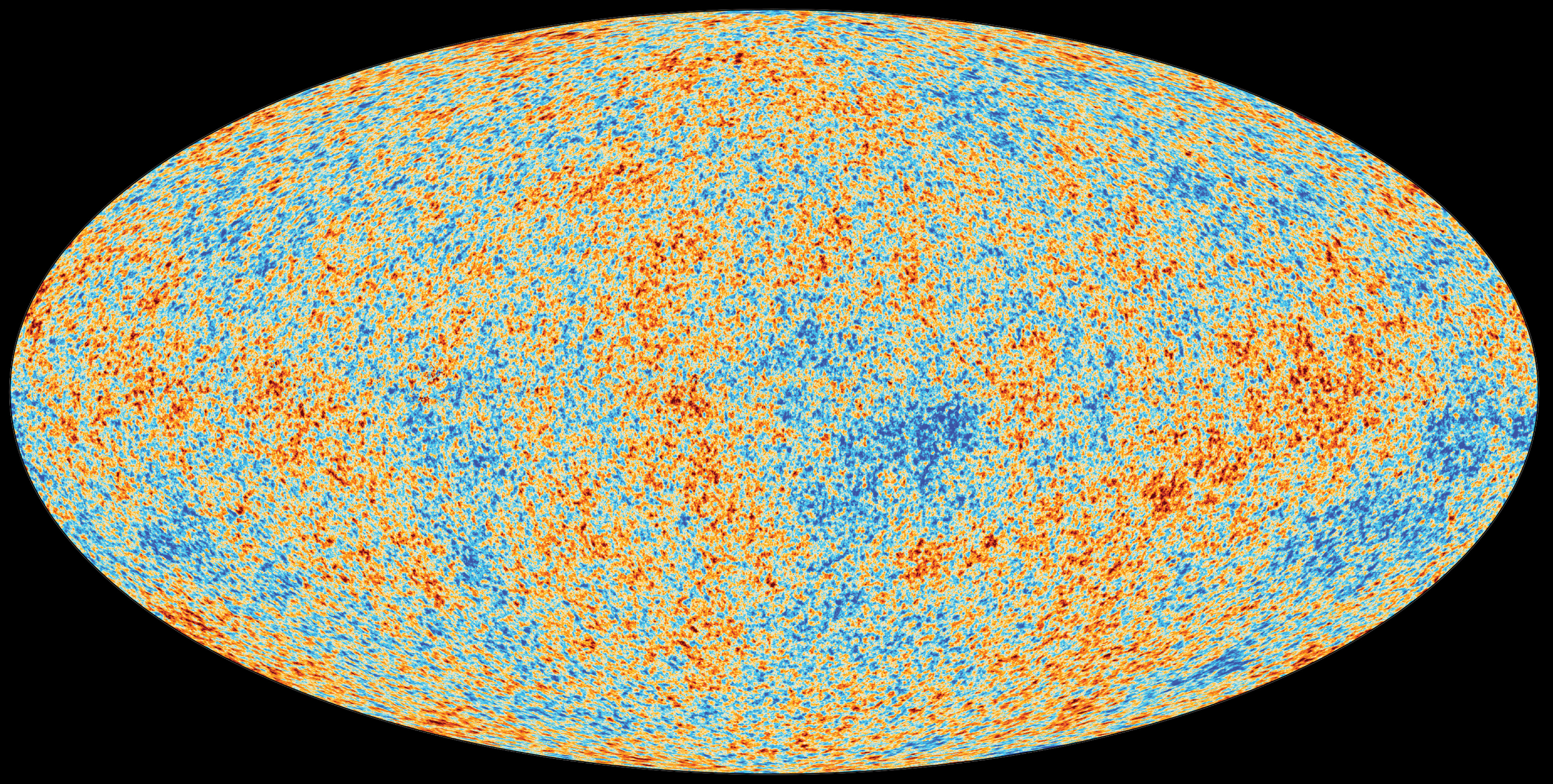 The cosmic microwave background as mapped by ESA’s Planck mission. The colors show tiny temperature differences in the early universe, not actual visible colors.
Looking into space is looking into the past
Light takes time to travel.
When you look at the Moon, you see it as it was about 1.3 seconds ago. When you look at the Sun, you see it as it was about 8 minutes ago. When telescopes look at distant galaxies, they see those galaxies as they were millions or billions of years ago.
So space is also a time machine. The farther away we look, the older the light is. This means astronomers can look backward through cosmic history. They can see younger and younger versions of the universe by observing farther and farther away.
But eventually, they hit a limit. Not a physical wall. The limit exists because the early universe was once impossible to see through. It was not empty space filled with stars. It was a hot fog.
The early universe was like a foggy room
Imagine standing in a room filled with thick fog.
There may be a lamp on the other side of the room, but you cannot see it clearly, not because the light disappears, but because it bounces off countless tiny droplets and scatters before it reaches you. Instead of traveling straight to your eyes, the light scatters in every direction. The early universe had a similar problem.
But instead of water droplets, the “fog” was made of plasma.
Plasma is what you get when matter is so hot that atoms cannot hold together. Instead of neat atoms, you have charged particles flying around: atomic nuclei and free electrons. This matters because of how light behaves. Light is made of particles called photons, and photons have a deeply unfortunate relationship with free electrons. Every time a photon tried to travel, it hit an electron, scattered off in a new direction, and almost immediately hit another one. It was like a confused tourist in a crowded market.
So the universe was full of light, but the light was trapped.
It was glowing, but completely opaque. That is the key idea. The early universe was not dark. It was more like a bright fog that no one could see through.
Then the universe cooled
The universe did not stay that hot forever. It was expanding, and as it expanded, it cooled. This is worth pausing on, because people often picture the Big Bang incorrectly. The Big Bang was not an explosion in space, like a bomb going off in a giant empty room. It was the expansion of space itself.
A useful analogy is raisin bread dough. Imagine raisins inside dough. As the dough rises, the raisins move farther apart. They are not flying through the dough. The dough itself is stretching. Galaxies are a little like those raisins. On very large scales, space itself expands, and galaxies become farther apart because the space between them grows.
As the universe expanded, it cooled down. Eventually, about 380,000 years after the Big Bang, it became cool enough for electrons to join with atomic nuclei. For the first time, stable atoms could form. Mostly, these were hydrogen and helium atoms.
This changed everything: once electrons were locked inside atoms, they were no longer floating freely around space. And without all those free electrons in the way, light could finally travel.
The fog cleared. The universe became transparent. And the trapped light was released. That released light is the cosmic microwave background.
The CMB is not the Big Bang itself
The CMB is not a photo of the exact beginning of the universe. It is not a snapshot of the Big Bang at time zero. It is the oldest light we can directly observe, but it comes from when the universe was already about 380,000 years old.
That may sound old, but compared with the universe today, which is about 13.8 billion years old, 380,000 years is extremely young.
Imagine taking a photo of a person when they are only a few hours old. That photo would not show the moment they were born, but it would still be a baby photo.
The CMB works like that. It does not show the universe’s birth. It shows the universe soon after it became visible.
Why is it called “microwave” background?
Here is another question: if the early universe was hot and glowing, why is that light now microwave radiation?
Answer is: Because the universe kept expanding. As space stretches, light traveling through it gets stretched too. Its wavelength becomes longer. Longer wavelengths mean lower energy and lower temperature. This is called redshift.
The CMB light has been traveling for more than 13 billion years. During that time, space expanded enormously, and the light stretched with it: hot and energetic early-universe radiation cooled gradually with less energy.
Today, that ancient light sits at about 2.7 kelvin, only a few degrees above absolute zero. And, it is no longer visible to human eyes. Its wavelength has stretched into the microwave part of the electromagnetic spectrum.
That is why it is called the cosmic microwave background:
cosmic because it comes from the whole universe, microwave because that is what the ancient light has become, background because it is everywhere behind everything else we see.
It is the faded glow of the early universe. ✨
The discovery began with pigeon droppings
The discovery of the CMB is one of the best stories in modern science.
In 1965, two radio astronomers named Arno Penzias and Robert Wilson were using a sensitive antenna at Bell Labs in New Jersey. They kept hearing a strange noise. It did not matter where they pointed the antenna. The hiss was always there. It seemed to come from every direction. At first, they assumed something was wrong. They checked the antenna. They tested the instruments. They looked for interference. Still, the hiss remained.
Then there were the pigeons. A pair of pigeons had apparently decided that this large, sensitive scientific instrument was a fine place to live. This was rude, but very much in character for pigeons. The birds left behind what Penzias politely called a “white dielectric material.". This is one of the great phrases in science history. It sounds technical and dignified. It means pigeon droppings.
So the scientists removed the pigeons. They cleaned the antenna. They got rid of the suspicious white material. But the hiss was still there. The pigeons had been innocent.
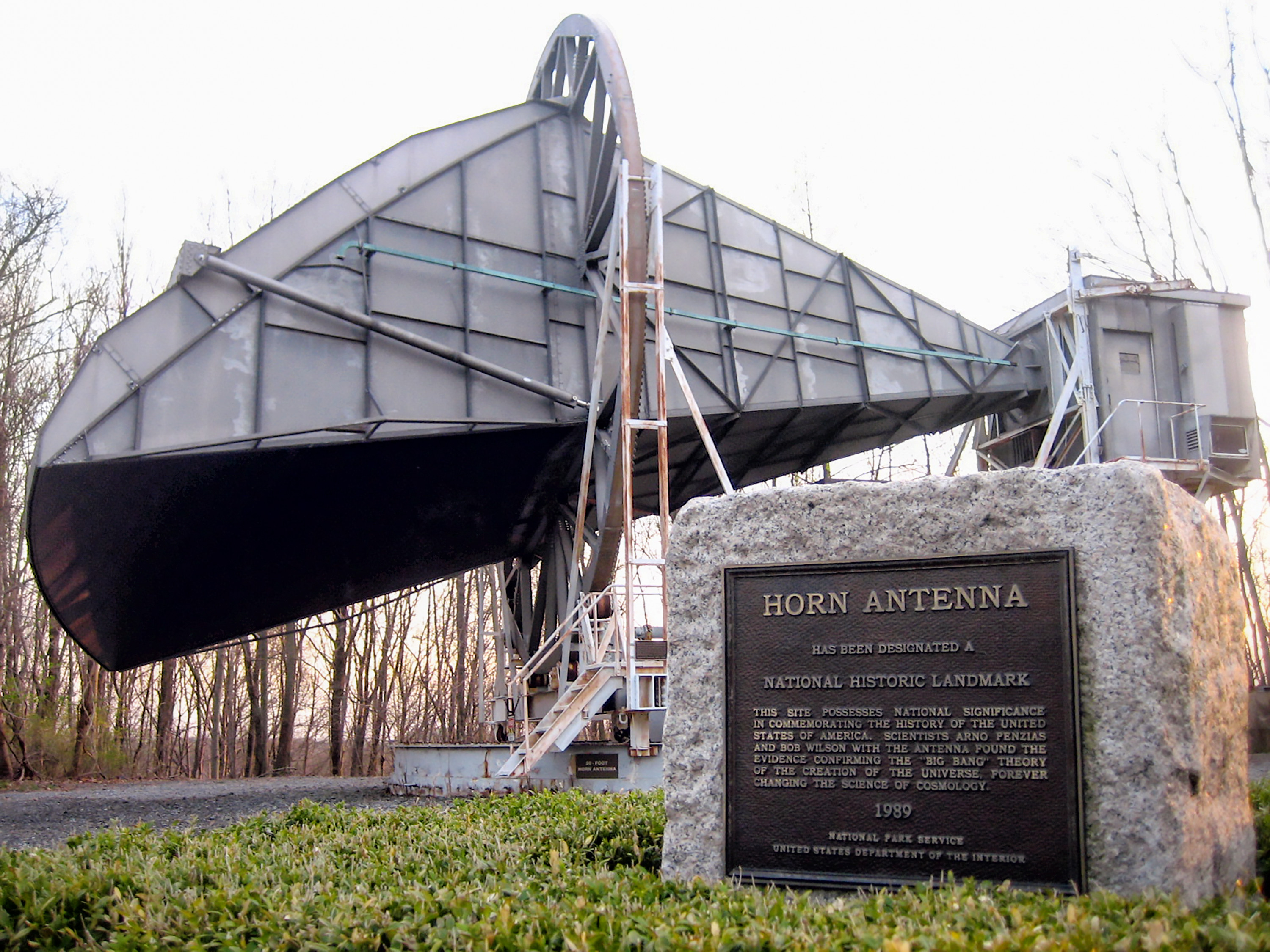
The Bell Labs Horn Antenna in New Jersey, where Penzias and Wilson detected the persistent microwave noise that turned out to be the CMB.
At the same time, other scientists had predicted that if the Big Bang theory was correct, there should be leftover radiation from the early universe. Penzias and Wilson had found it. The annoying hiss was not a machine problem. It was ancient light. They had accidentally detected the afterglow of the young universe.
The CMB is almost perfectly smooth
When scientists studied the CMB, they found something remarkable. It looked almost the same in every direction. No matter where we point our instruments, the temperature of the CMB is about 2.7 kelvin, that tells us the early universe was incredibly smooth.
But it was not perfectly smooth. And that tiny imperfection is important. When scientists made detailed maps of the CMB, they found extremely small temperature differences. Some regions were slightly warmer. Some were slightly cooler.
The differences were tiny — about one part in 100,000. Those tiny differences were the seeds of everything. Slightly denser regions had slightly stronger gravity. Over time, they pulled in more matter. Those regions grew larger. Eventually, they became the starting points for galaxies, galaxy clusters, and the huge cosmic web of structure we see today.
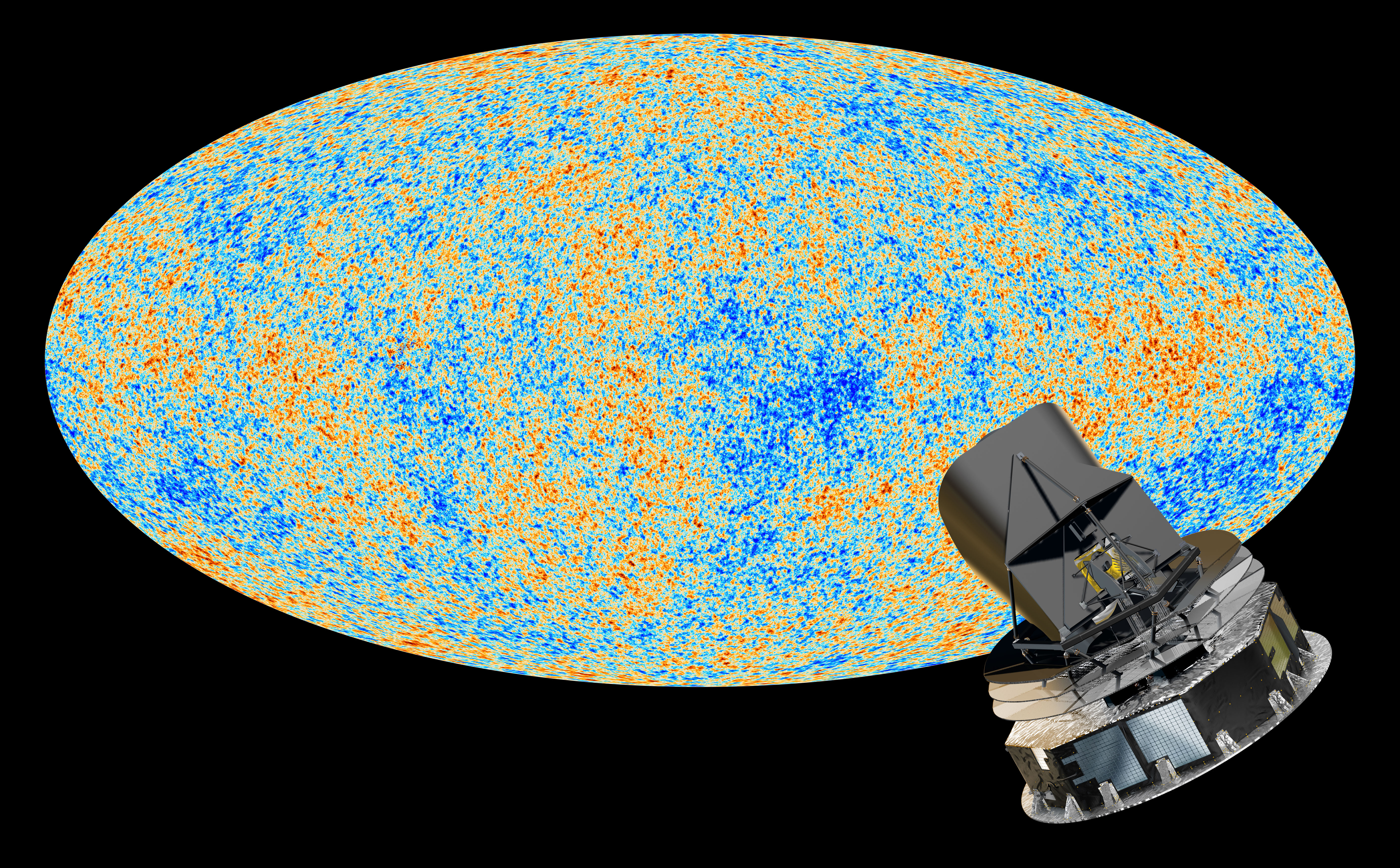
ESA’s Planck spacecraft helped measure the CMB in extraordinary detail, revealing the tiny temperature fluctuations that later grew into cosmic structure.
So when we look at a map of the CMB, we are not just seeing ancient light. We are seeing the earliest traces of the universe’s future shape. The CMB shows the tiny wrinkles that later grew into galaxies. Including the Milky Way. Including the material that eventually became Earth. ncluding, after a very long and unreasonable chain of events, us.
Why the CMB matters
The cosmic microwave background matters because it gives us evidence. Without it, the Big Bang might sound like a huge story about something impossibly far in the past.
With the CMB, we have physical evidence arriving from every direction in the sky. It tells us that:
- the universe was once hot and dense
- the universe expanded and cooled
- when atoms first formed
It also helps scientists estimate major facts about the universe, including its age, its composition, and the amount of ordinary matter, dark matter, and dark energy. That is a lot of information to get from something that first appeared as a faint hiss.
But that is what makes the CMB so powerful. It is not just background noise. It is fossil light.
The cosmic microwave background is one of the most beautiful ideas in astrophysics because it changes how we think about darkness. When we look at the night sky, we mostly see black space dotted with stars.But behind the stars, behind the galaxies, behind almost everything we can see, there is an older glow.
It is too cold and stretched for our eyes to detect, but it is there: the first light that could travel freely through the universe. And I think it's truly magnificent.